When the Rich Don’t Like the Truth, They Don’t Deny It—They Sue It to Death
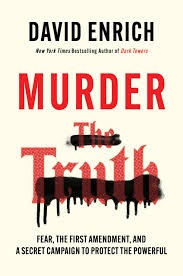
I didn’t expect this book to get under my skin. I thought I was picking up another well-written takedown of Trump’s war on the media—you know, fact-checking, ego, the usual chaos. But Murder the Truth turned out to be something more serious. More intimate. Scarier, even.
Because this isn’t just a book about politics. It’s a book about power—who controls truth, and what happens when truth becomes a liability.
David Enrich, who’s a seasoned editor at The New York Times, pulls back the curtain on the quiet, calculated war being waged against journalists in America. Not the screaming headlines or Twitter tantrums kind of war. The kind that happens in legal briefs, bank transfers, and boardrooms. The kind that works.
Truth Doesn’t Die Loudly—It Gets Bled Out in Court
The first few chapters build slowly, maybe too slowly if you’re impatient, but then Enrich hits you with the legal equivalent of a gut punch: the strategy to dismantle New York Times v. Sullivan—that 1964 ruling that’s been the lifeline for investigative journalism for over half a century.
That ruling basically says that if you’re a public figure, you can’t sue a journalist for defamation unless you can prove actual malice. In other words, the journalist had to knowingly lie or recklessly disregard the truth. It’s a high bar for a reason. It’s what lets people report on the rich and powerful without being bankrupted by lawsuits.
But now? That protection is hanging by a thread. And there are people with enough money, motive, and Supreme Court access to start snipping.
Trump, Thiel, and the Lawsuit as a Weapon
This isn’t just a Trump book. He’s here, of course, and his quotes are as venomous as you’d expect (“we’re going to open up the libel laws,” etc.), but Enrich wisely doesn’t make him the sole villain.
He zeroes in on people like Peter Thiel, who didn’t just sue Gawker—he funded Hulk Hogan’s lawsuit in secret, as revenge for being outed as gay. The result? Gawker was destroyed. Not because it lied, but because it couldn’t afford the fight.
And that’s the point Enrich keeps driving home: truth isn’t enough if you can’t afford to defend it.
Lawsuits are becoming tools of vengeance, intimidation, and reputation management. Enrich shows how billionaires and politicians alike are using them to bleed out journalists—financially, emotionally, and professionally. And most of the time? It’s working.
Clarence Thomas and the Loaded Gun on the Supreme Court’s Shelf
One of the most disturbing parts of the book—at least for me—was reading how Supreme Court justices are laying the groundwork to gut Sullivan. Clarence Thomas has already written that he wants it overturned. Neil Gorsuch is openly questioning its usefulness.
Think about that. We could be one or two cases away from a legal environment where journalists can be sued for reporting uncomfortable truths. Not falsehoods—just truths that inconvenience someone powerful.
Enrich doesn’t scream about this. He lays it out quietly, factually. Which somehow makes it worse.
The Stories Inside the Story
Enrich threads in case after case of journalists—some famous, some obscure—who’ve been targeted by lawsuits not because they got the story wrong, but because they got it right. And that scared someone.
He tells these stories with compassion but never melodrama. There’s a kind of steady anger underneath it all. The kind of anger that comes from watching your colleagues get crushed while the public shrugs because hey, “fake news,” right?
One story that stuck with me involved a local paper getting sued into near-collapse for reporting on a city official’s shady land deals. It wasn’t a splashy national headline. Just a community paper trying to do its job. And that job cost them everything.
Is It a Perfect Book? No. But It Hits Where It Counts.
There are moments where Enrich gets bogged down in legal history. A few chapters feel more like a law school lecture than a narrative. But to be honest, I needed the context. And I appreciated that he trusted readers to sit with the complexity.
He doesn’t offer easy answers. He doesn’t end with a call to action or a policy platform. This is not that kind of book.
What he offers is clarity. And maybe even urgency. The kind that makes you think twice the next time someone shrugs and says, “the press is the enemy.”
Who This Book Is For
If you’re a journalist, obviously, this is required reading. But it’s also for anyone who cares about democracy—not in a performative, bumper-sticker way, but in a nuts-and-bolts way.
If you’ve ever asked, “Why doesn’t the media report on X?” this book might help you understand why: fear, cost, and silence bought with cash and lawsuits.
It’s for readers who value independent reporting, yes—but also for readers who think critically, who want to know how power functions when it’s too smart to be loud.
Final Take: 4.7 Stars
This isn’t a comfortable book. It’s not supposed to be. But it’s necessary.
Murder the Truth peels back the illusion that press freedom is permanent. It’s not. It’s negotiated, case by case, in rooms you and I will never see. Enrich gives us a glimpse inside—and it’s not pretty.
What scares me most isn’t the lawsuits. It’s how effective they’ve already been. And how few people seem to notice.
Want the audiobook?
You can listen to Murder the Truth free with an Audible trial
FTC Disclosure: This post contains affiliate links. If you sign up or purchase through them, I may earn a small commission at no extra cost to you. Every click helps support independent reviews like this.
Your Turn
Do you think the press is still free in America? Or is the threat of litigation already shaping what gets reported—and what doesn’t?
Drop your thoughts below. I’m curious how you’re seeing this play out in your world.
 Bound to Books
Leave a comment