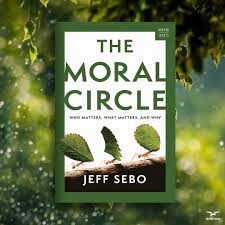
What if our moral obligations didn’t stop at humans—or even at animals? What if they extended to artificial intelligence, insects, and maybe even microbes?
That’s the bold, unsettling, and thought-provoking argument Jeff Sebo makes in The Moral Circle: Who Matters, What Matters, and Why. In this powerful and meticulously reasoned book, Sebo dismantles the traditional hierarchy of moral worth and asks us to radically rethink who (or what) we should care about.
It’s the kind of book that upends your perspective—and maybe even makes you a little uncomfortable. But that’s precisely what makes it so necessary.
The Case Against Human Exceptionalism
From the start, Sebo takes aim at what most of us take for granted: the assumption that human beings are at the top of the moral ladder. We create laws and ethical systems that prioritize our own interests while pushing nonhuman animals—and anything else we deem “lesser”—to the margins.
But is this hierarchy justified? Sebo argues that it isn’t. In fact, he suggests that drawing a sharp moral boundary around humans and excluding other beings is an arbitrary and unjustifiable stance. If our moral concern is based on the ability to experience suffering and well-being, then shouldn’t we extend that concern to any being with those capacities?
It’s a compelling argument, and one that forces us to confront just how limited our ethical frameworks really are.
The Expanding Moral Circle: Who Deserves Consideration?
One of the book’s central ideas is that our “moral circle”—the group of beings we consider morally relevant—has expanded over time. Centuries ago, many societies didn’t even recognize all humans as equally deserving of rights. Slavery, discrimination, and exclusion were built into the social order. Over time, those circles widened, encompassing more people regardless of race, gender, or nationality.
Now, Sebo argues, it’s time for the next expansion.
And here’s where things get even more provocative. While many people already accept that nonhuman animals deserve moral consideration—particularly intelligent mammals like primates, elephants, and dolphins—Sebo pushes the boundary much further. He argues that:
• Insects and other small creatures may have sentience, and we should err on the side of caution in how we treat them.
• Artificial intelligence could one day develop capacities that warrant moral concern, even if it doesn’t look or think like a human.
• Microbial life presents complex ethical questions, especially as we learn more about the interconnectedness of all living systems.
Each of these arguments forces us to confront a tough question: where do we draw the line? And, more importantly, should we be drawing one at all?
Compelling Case Studies That Challenge Our Assumptions
Sebo doesn’t just make these claims in the abstract. He presents real-world case studies that expose the cracks in our current ethical thinking.
1. Captive Elephants and Legal Rights
Ongoing lawsuits about the rights of elephants in captivity highlight the contradictions in how we treat intelligent animals. If an elephant in a zoo can be cognitively and emotionally similar to a child, why don’t they have at least some of the same protections?
2. The Ethics of Insect Farming
With the rise of insect-based protein industries, trillions of insects are now being bred and killed for food. If insects can suffer—even to a small degree—doesn’t this demand a reassessment of our treatment of them?
3. The Possibility of AI Consciousness
As artificial intelligence becomes more advanced, it raises questions we’re unprepared to answer. If an AI system can express distress, make decisions, and form relationships, should we dismiss its experiences just because it isn’t biological?
These case studies aren’t meant to provide easy answers. Instead, they force us to confront uncomfortable moral dilemmas—and acknowledge that our current ethical intuitions might not be as solid as we think.
The Precautionary Principle: When in Doubt, Expand the Circle
One of Sebo’s most persuasive arguments is that we should take a precautionary approach when it comes to moral consideration.
What does that mean in practice?
It means that if there’s even a reasonable possibility that a being can suffer or experience well-being, we should act as if they do—at least until we have evidence to the contrary. This shifts the burden of proof away from requiring absolute certainty before we extend moral concern.
This approach isn’t just an abstract philosophical exercise. It has real-world consequences.
• Should we rethink our reliance on factory farming, given the overwhelming evidence of animal suffering?
• Should we slow down the development of AI until we better understand whether it can experience distress?
• Should we reconsider mass pesticide use, given the potential for insect sentience?
These are the kinds of ethical challenges Sebo urges us to take seriously.
Engaging with Ethical Theories
Sebo doesn’t just throw out provocative questions—he grounds his arguments in well-established ethical theories, including:
• Utilitarianism: If our goal is to maximize well-being and minimize suffering, then ignoring nonhuman sentience is ethically indefensible.
• Rights-Based Ethics: If rights are based on intrinsic worth rather than species membership, then we need to reconsider how we extend legal protections.
• Virtue Ethics: A compassionate and just society should cultivate concern for all beings capable of suffering, not just those who look or think like us.
While Sebo is clearly advocating for a broader moral scope, he also acknowledges the difficulties in applying these theories in practice. How do we balance competing moral interests? Where do we set practical limits? These are questions he leaves open for discussion.
Final Thoughts: A Book That Demands Reflection
The Moral Circle isn’t an easy read in the sense that it doesn’t allow for passive agreement. It challenges deeply ingrained beliefs and forces us to grapple with moral issues we often prefer to ignore.
For some, the idea of extending moral concern to insects or AI might seem extreme. But history shows us that what once seemed radical—abolitionism, women’s rights, animal welfare—eventually becomes mainstream. Sebo is betting that the next frontier of moral progress lies in expanding our ethical boundaries beyond human-centric thinking.
Whether or not you agree with all of his conclusions, one thing is certain: this book will make you think. And in a world facing urgent ethical challenges—from climate change to technological advancements—that’s exactly what we need.
Disclosure: This post contains affiliate links. If you sign up for a free Audible trial or make a purchase through these links, I may earn a small commission at no extra cost to you. This helps support my work and allows me to keep providing book recommendations. Thank you for your support!
 Bound to Books
Leave a comment