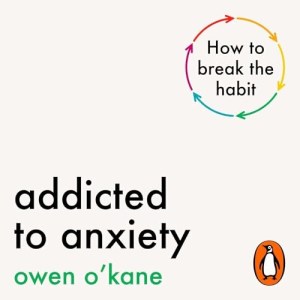
Anxiety is a universal experience, but what if we’ve been looking at it all wrong? In Addicted to Anxiety: How to Break the Habit, Owen O’Kane presents a bold new perspective: anxiety isn’t just a feeling—it’s a habit. And like any habit, it can be broken.
O’Kane, a psychotherapist with years of clinical experience, argues that many people unconsciously develop an addictive relationship with their anxious thoughts. They repeatedly engage in worry, overthinking, and worst-case-scenario planning, reinforcing a cycle that keeps them stuck. The book challenges conventional wisdom that treats anxiety purely as a disorder and instead offers an actionable framework to disrupt the cycle and regain control.
Overview of Key Concepts
Anxiety as an Addiction
O’Kane’s central thesis is that anxiety functions much like an addiction. He explains that just as smokers reach for a cigarette when stressed, anxious individuals reflexively turn to worry and rumination as a coping mechanism. This habit forms neural pathways that reinforce anxiety’s grip on the brain.
He outlines how people unintentionally “feed” their anxiety by engaging in behaviors like:
• Constantly seeking reassurance
• Obsessively planning for worst-case scenarios
• Avoiding situations that trigger discomfort
• Replaying past mistakes
• Overconsuming news and social media for a sense of control
The Cycle of Anxiety
The book breaks down the anxiety cycle into four stages:
1. Trigger – An external event or internal thought sparks anxiety.
2. Reaction – The brain shifts into overdrive, generating catastrophic thoughts.
3. Reinforcement – Engaging in anxious behaviors (e.g., excessive planning, avoidance) provides short-term relief but strengthens the habit.
4. Repeat – The cycle continues, making anxiety feel like an inescapable loop.
O’Kane emphasizes that breaking this cycle isn’t about eliminating anxiety entirely but about altering how we engage with it.
Practical Strategies to Break the Habit
Unlike many anxiety books that focus solely on relaxation techniques, Addicted to Anxiety is refreshingly action-oriented. O’Kane provides a set of tools to help readers recognize and rewire their anxious habits.
1. Name It, Don’t Feed It
One of the book’s most powerful insights is learning to label anxious thoughts without engaging with them. Instead of spiraling into “What if this goes wrong?” thinking, O’Kane suggests a simple shift: “That’s my anxiety habit talking.” By recognizing worry as a habitual response rather than a fact, we can weaken its hold.
2. The 10-Second Disruption Rule
To interrupt an anxious spiral, O’Kane introduces a quick mental reset: the 10-second rule. When anxiety kicks in, pause for 10 seconds and consciously choose a different action—whether it’s shifting focus, engaging in a physical movement, or reminding yourself that worry is optional. This technique helps retrain the brain to disengage from anxious patterns.
3. Tolerance Training
A major reason people remain stuck in anxiety is avoidance. O’Kane encourages readers to build uncertainty tolerance—gradually exposing themselves to situations that trigger discomfort without resorting to safety behaviors (e.g., excessive checking or avoidance). Over time, this retrains the brain to accept uncertainty rather than fear it.
4. Breaking the Reassurance Loop
One of the most relatable sections of the book tackles the reassurance-seeking habit. Many anxious individuals constantly ask for validation (e.g., “Are you sure everything will be okay?”), but this only reinforces dependence on external comfort. O’Kane provides strategies to resist the urge for reassurance and develop self-trust instead.
5. The “Let It Play” Method
A unique approach O’Kane introduces is the “Let It Play” method, where instead of suppressing anxious thoughts, you let them run like background noise. Imagine worry as a radio station playing in another room—you don’t have to engage with it. This technique helps reduce the urgency of anxious thinking, making it easier to move forward without getting stuck.
Strengths of the Book
1. A Fresh Perspective on Anxiety
One of the book’s biggest strengths is how it reframes anxiety. By treating it as a habitual behavior rather than an uncontrollable disorder, O’Kane empowers readers to take action rather than feel helpless.
2. Actionable and Practical
Many self-help books on anxiety focus on theory or mindfulness alone. Addicted to Anxiety stands out by offering clear, actionable strategies that can be implemented immediately. The step-by-step approach makes it easy for readers to experiment with different techniques and find what works for them.
3. Science-Backed Yet Accessible
O’Kane seamlessly blends neuroscience with real-life application. His explanations of neural pathways and habit formation are easy to understand, making complex psychological concepts approachable for the everyday reader.
4. No Toxic Positivity
Unlike books that promote “just think positive” advice, O’Kane acknowledges that anxiety is a deeply ingrained response and breaking the habit requires effort. He doesn’t sugarcoat the process but offers realistic guidance on how to gradually retrain the brain.
Weaknesses of the Book
1. Not a One-Size-Fits-All Solution
While the habit-based approach is compelling, anxiety can stem from a variety of factors, including trauma, genetics, and chronic stress. Some readers may find that their anxiety isn’t as easily disrupted by habit-breaking techniques alone and may still need therapy or medication.
2. More Depth Needed in Certain Areas
Some sections, particularly those on exposure therapy and uncertainty tolerance, could benefit from more in-depth case studies or examples. Readers new to these concepts might need additional guidance on how to apply them in real-life scenarios.
3. Could Be Too Simplistic for Severe Anxiety
For those with debilitating anxiety disorders (e.g., generalized anxiety disorder, OCD, or panic disorder), the book’s strategies might not be enough on their own. The emphasis on self-reliance is helpful but may not fully address deeper-rooted anxiety issues that require professional intervention.
Who Should Read This Book?
• People who struggle with excessive worry, overthinking, and worst-case-scenario thinking.
• Those looking for practical, science-backed strategies to manage everyday anxiety.
• Readers who feel stuck in anxiety cycles and want a fresh, habit-based approach.
• Individuals interested in breaking free from reassurance-seeking and avoidance behaviors.
Final Verdict: 4.5/5 Stars
Addicted to Anxiety is a game-changer for anyone tired of feeling trapped in anxious habits. O’Kane delivers a compelling, science-backed guide that helps readers recognize anxiety for what it is—a habit that can be rewired. His approach is empowering, practical, and refreshingly different from traditional anxiety management advice.
While it may not be a cure-all for severe anxiety disorders, the book offers an invaluable toolkit for shifting how we engage with anxiety. If you’ve ever felt like you can’t stop worrying no matter how hard you try, this book provides a roadmap for breaking free.
Bottom line: If anxiety has become your default mode, Addicted to Anxiety will teach you how to disrupt the cycle and reclaim your mental freedom.
 Bound to Books
Leave a comment